Sudden cardiac arrest (SCA) is one of the leading causes of unexpected death worldwide.
It is fast, unforgiving, and survivable, but only if defibrillation happens quickly.
Today, survival rates outside hospitals are often below 10%. In many cases, this is not because help doesn’t exist, but because it arrives too late.
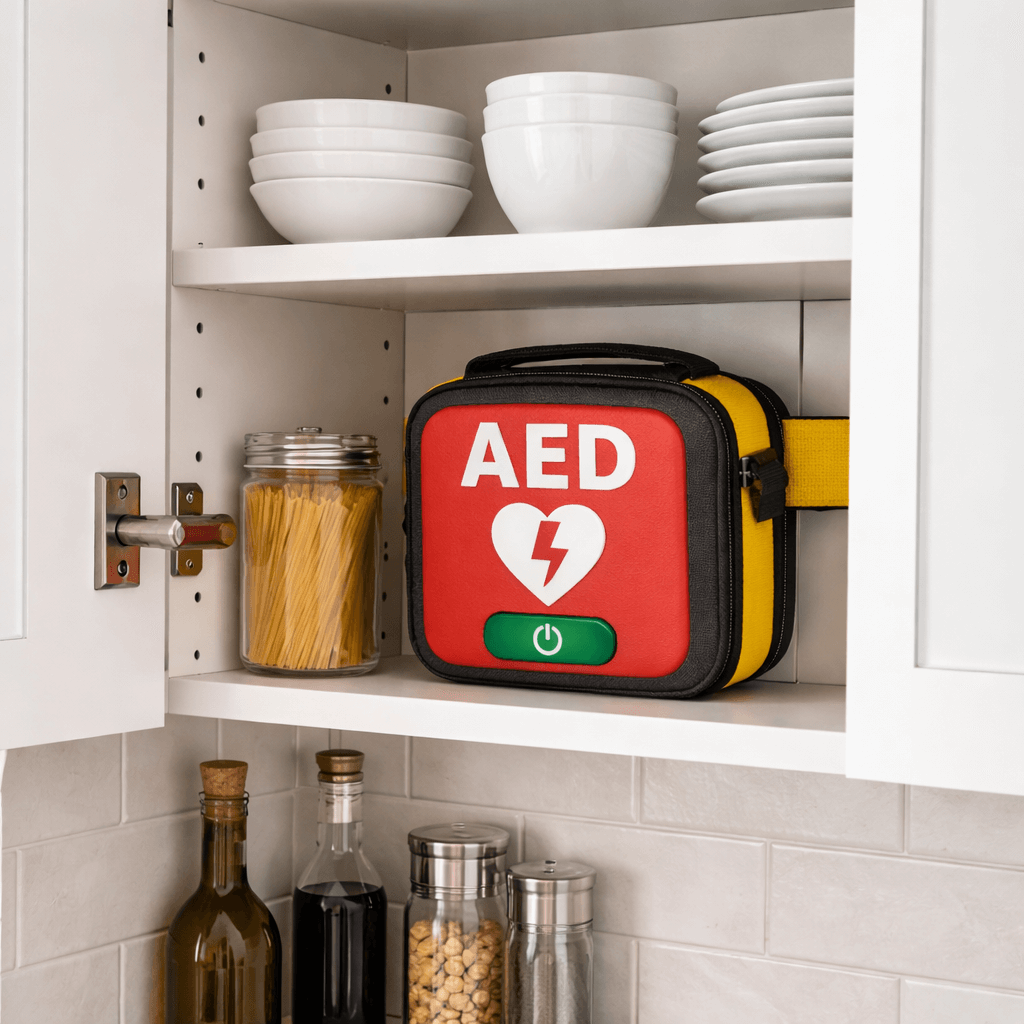
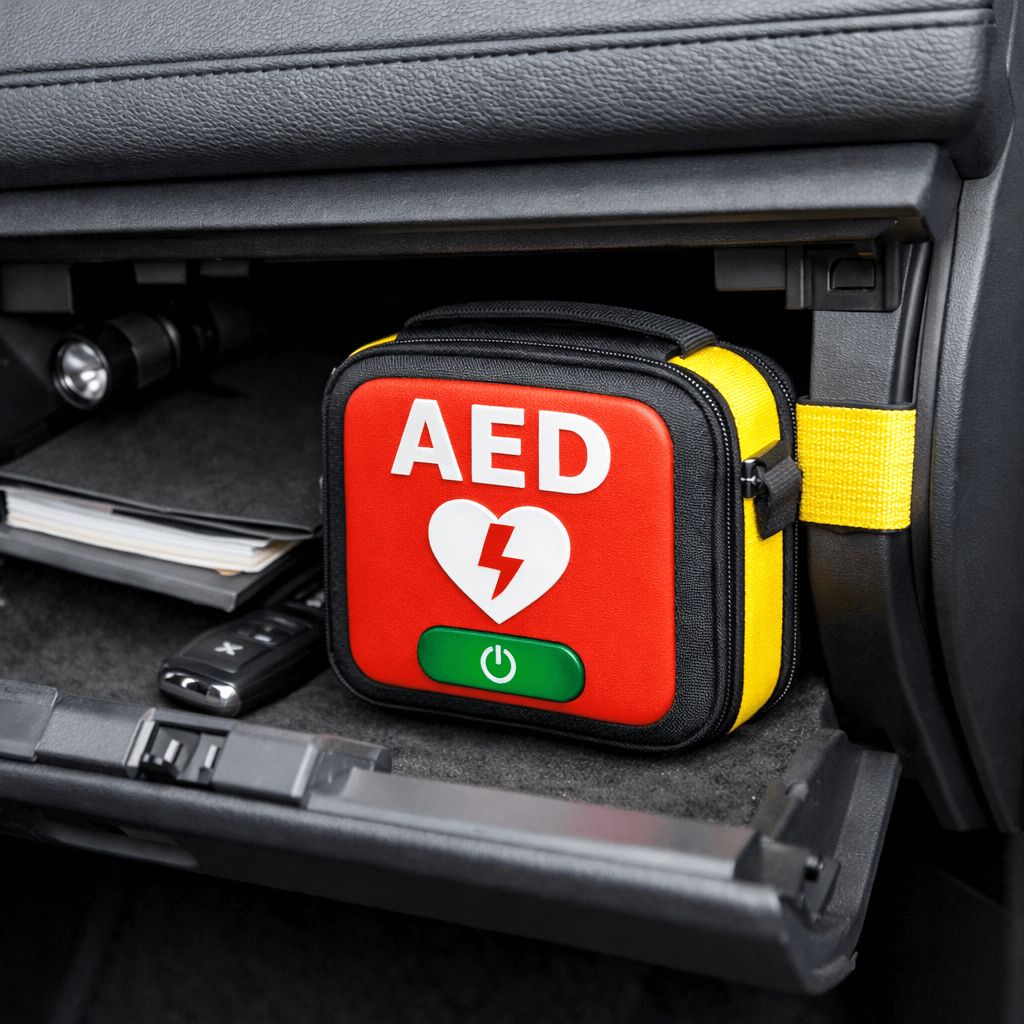
This article argues that Automated External Defibrillators (AEDs) should be affordable enough to be present in homes and cars, and that government action is the missing piece preventing this from happening.
The time problem: minutes matter more than medicine
When sudden cardiac arrest occurs:
- Brain damage begins in 4–6 minutes
- Ambulance response times are often 8–12 minutes or more
- Survival drops 7–10% for every minute without defibrillation
An AED used within the first 1–3 minutes can raise survival rates to 40–60%.
The problem is not that AEDs don’t work.
The problem is that they are not where people are when collapse occurs — homes, cars, workplaces, and communities.
The affordability paradox
AEDs typically cost A$1,000–$3,000, placing them out of reach for most households.
This creates a self-reinforcing cycle:
- AEDs are expensive → few people buy them
- Few people buy them → low production volume
- Low volume → high per-unit cost
- High cost → AEDs remain rare
This is not a market failure caused by lack of demand.
It is a policy and regulatory failure.
This is not an engineering problem
With modern technology, the core hardware of an AED is relatively simple:
- Heart rhythm sensing (ECG)
- Shock-delivery electronics
- Embedded software
- Battery and pads
From a purely technical standpoint, a fully functional AED could be built for a few hundred dollars.
So why doesn’t one exist?
Because AEDs are regulated as high-risk medical devices, designed under the assumption that they will be:
- Sold in small numbers
- Used in institutional settings
- Fully liable for every possible failure
These rules were never designed for mass-market, household life-saving devices.
Liability and regulation are the real cost drivers
Manufacturers face:
- Extremely costly certification processes
- Country-by-country regulatory approval
- Long-term liability for rare failure cases
- Expensive insurance requirements
Even if an AED saves thousands of lives, a single failure can trigger lawsuits costing millions.
The result is predictable:
- Conservative designs
- High prices
- Sales limited to governments and institutions
- No incentive to pursue mass affordability
We have solved this problem before
Society has faced similar challenges with:
- Seat belts
- Airbags
- Smoke alarms
- Fire extinguishers
- Vaccines
None became ubiquitous through free markets alone.
They became affordable and widespread because governments intervened by:
- Defining consumer-appropriate standards
- Sharing or limiting liability
- Mandating inclusion
- Supporting large-scale manufacturing
AEDs are simply late to this evolution.
The public health case for household AEDs
If AEDs were affordable (A$300–$500):
- They could be included in first-aid kits
- Installed in private vehicles
- Common in apartment buildings
- Standard in schools and workplaces
This would:
- Dramatically reduce time to defibrillation
- Save tens of thousands of lives annually
- Reduce long-term healthcare costs from brain injury
- Shift cardiac arrest from “often fatal” to “often survivable”
These benefits are societal, not private, which is exactly why government leadership is required.
A realistic policy proposal
1. Create a “Consumer AED” category
Establish a simplified regulatory class distinct from professional AEDs:
- Limited scope
- Clear performance requirements
- Designed for layperson use in homes and cars
This mirrors how smoke alarms differ from industrial fire systems.
2. Government-funded certification
Remove the biggest barrier to entry by:
- Funding safety validation
- Publishing open standards
- Allowing multiple manufacturers to compete
This alone could cut prices dramatically.
3. Liability protection for compliant devices
Introduce legal protections similar to:
- Good Samaritan laws
- Vaccine injury compensation schemes
If a device meets defined standards, manufacturers should not face unlimited liability for rare failures.
4. Scale through inclusion
Encourage or mandate AED inclusion in:
- New homes
- Vehicles
- Rental properties
- Public grants and subsidies
Once scale exists, cost falls rapidly.
The ethical question
The technology to save these lives already exists.
The question is no longer can we, but why haven’t we?
When a person collapses at home and no AED is nearby, the outcome is often death — not because it was unavoidable, but because access was denied by cost and policy.
That is not a technical failure.
It is a governance decision.
Conclusion: this is a government responsibility
Affordable, widely available AEDs represent one of the highest-impact public health interventions available today.
Engineers can build them.
Doctors want them.
Communities need them.
Only governments can create the conditions that make them affordable and ubiquitous.
Every minute matters.
Every barrier costs lives.
This is solvable, if we choose to solve it.
An invitation to engage
This proposal is offered in good faith, with one goal: saving lives through faster access to defibrillation.
We invite:
- Health departments
- Regulators
- Emergency services
- First responders
- Policymakers and advisors
to engage in a structured discussion on how household and vehicle AED access can be safely and affordably achieved.
Lives depend on what we choose to do next.
As a frontline Paramedic, I have seen what early defibrillation can do, and what happens when it is not available in time.
The question is not whether this will save lives.
The question is whether we are willing to act.